


Witness the Stunning Serengeti migration journey (Wildebeest Migration)
- Aug 2, 2025
- 4 min read
The Serengeti Migration Journey is one of the most awe-inspiring natural events on Earth. Every year, millions of wildebeest, zebras, and gazelles travel across the vast plains of the Serengeti and Maasai Mara ecosystems in search of fresh grazing and water. This incredible movement of wildlife is a spectacle of survival, endurance, and nature’s raw beauty. Whether you are a wildlife enthusiast, a photographer, or simply someone who loves adventure, witnessing this migration is an unforgettable experience.
Understanding the Serengeti Migration Journey
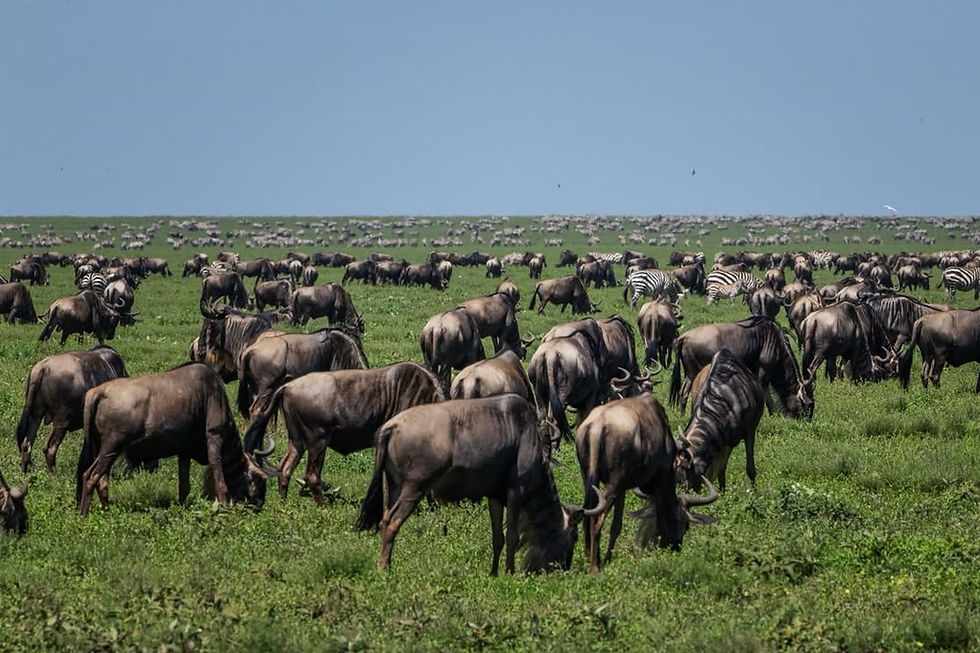
The Serengeti Migration Journey is a continuous cycle that follows the rains and the growth of fresh grass. It involves over 1.5 million wildebeest, accompanied by hundreds of thousands of zebras and gazelles. The journey covers approximately 1,800 miles annually, moving in a clockwise direction between Tanzania’s Serengeti National Park and Kenya’s Maasai Mara Reserve.
This migration is driven by the need for food and water. During the dry season, animals gather in the southern Serengeti, where the short grass plains provide ample grazing. As the rains begin in the north, the herds move towards the Grumeti and Mara Rivers, crossing dangerous waters filled with crocodiles. This movement is not only a test of endurance but also a vital part of the ecosystem, supporting predators like lions, cheetahs, and hyenas.
To fully appreciate the migration, it’s important to understand the different phases:
Calving Season (January - February): The southern Serengeti becomes a nursery where thousands of wildebeest calves are born.
Movement to Western Corridor (March - May): The herds start moving northwest towards the Grumeti River.
River Crossings (July - September): The dramatic crossing of the Mara River is a highlight, with many animals facing predators and strong currents.
Return to Southern Serengeti (October - December): The herds move back south as the rains return.
This cycle repeats every year, creating a dynamic and ever-changing wildlife spectacle.
Best Ways to Experience the Serengeti Migration Journey
Experiencing the migration up close requires some planning. Here are practical tips to make the most of your visit:
Choose the Right Safari Operator: Look for companies with experienced guides who know the migration routes and can take you to the best viewing spots.
Select Your Accommodation Wisely: Options range from luxury lodges to mobile camps that move with the herds, offering unique proximity to the action.
Plan Your Transport: While many safaris use 4x4 vehicles, some offer hot air balloon rides for a breathtaking aerial view.
Pack Smart: Bring binoculars, a good camera with zoom, sun protection, and comfortable clothing for varying weather conditions.
Respect Wildlife: Maintain a safe distance, avoid loud noises, and follow your guide’s instructions to protect both yourself and the animals.
Booking early is essential, especially during peak migration months, as accommodations and tours fill up quickly.

What is the Best Month to Visit Serengeti?
Timing your visit is crucial to witness the most dramatic moments of the migration. The best month depends on what you want to see:
January to March: Ideal for witnessing the calving season in the southern Serengeti. This period offers the chance to see newborn wildebeest and predator activity.
April to May: The herds begin moving towards the western corridor. This is a quieter time with fewer tourists.
July to September: The most popular time to see the Mara River crossings. This is when the migration faces its greatest challenges, making for thrilling wildlife encounters.
October to December: The herds return south, and the landscape is lush and green after the rains.
Each month offers unique experiences, so consider your interests when planning your trip.
Wildlife and Ecosystem Impact of the Migration
The migration is not just a spectacle; it plays a vital role in maintaining the Serengeti ecosystem. The movement of such large numbers of herbivores helps:
Nutrient Cycling: Grazing and movement distribute nutrients across the plains, supporting plant growth.
Predator-Prey Balance: The migration sustains populations of predators like lions, leopards, and crocodiles.
Biodiversity: The dynamic environment created by the migration supports a wide range of species.
Conservation efforts are critical to protect this natural wonder. Threats such as habitat loss, poaching, and climate change could disrupt the migration patterns. Supporting responsible tourism and conservation organizations helps ensure the migration continues for future generations.
Planning Your Serengeti Migration Safari
To make your trip seamless and enjoyable, consider these actionable recommendations:
Book Early: Secure your safari and accommodations well in advance, especially if traveling during peak migration months.
Travel Insurance: Ensure your policy covers safari activities and potential changes in travel plans.
Health Precautions: Consult a travel clinic for vaccinations and malaria prevention.
Local Culture: Learn about the Maasai people and their traditions, as many safaris include cultural visits.
Photography Tips: Use a telephoto lens, shoot during golden hours, and be patient to capture the best wildlife moments.
By preparing carefully, you can fully immerse yourself in the magic of the migration and create lasting memories.
Witnessing the serengeti wildebeest migration is a bucket-list experience that offers a deep connection with nature’s rhythms. From the thunderous hooves of thousands of wildebeest to the patient stalking of predators, every moment is a story of life and survival on the African plains. Whether you choose to visit during the calving season or the dramatic river crossings, the Serengeti Migration Journey promises an adventure like no other.


Comments